

Chromatin is the arrangement of DNA and proteins in which chromosomes are formed. Correspondingly, chromatin is formed from nucleosomes, which are comprised of a set of four histone proteins (H2A, H2B, H3, H4) wrapped with DNA. Chromatin is a very dynamic structure in which numerous post-translational modifications work together to activate or repress the availability of DNA to be copied, transcribed, or repaired. These marks decide which DNA will be open and commonly active (euchromatin) or tightly wound to prevent access and activation (heterochromatin). Common histone modifications include methylation of lysine and arginine, acetylation of lysine, phosphorylation of threonine and serine, and sumoylation, biotinylation, and ubiquitylation of lysine.
H3K56me1 Antibody

Polyclonal antibody raised in rabbit against Histone H3 (monomethyl Lys56), using a KLH-conjugated synthetic peptide.
| Lot | 002 |
|---|---|
| Concentration | 1.1 μg/μl |
| Species reactivity | Human, mouse, C. elegans, rat, chicken, Xenopus, Drosophila, plant |
| Type | Polyclonal |
| Purity | Affinity purified |
| Host | Rabbit |
| Storage Conditions | Store at -20°C; for long storage, store at -80°C. Avoid multiple freeze-thaw cycles. |
| Storage Buffer | 0.02 M Potassium Phosphate, 0.15 M Sodium Chloride, 30% glycerol. |
| Precautions | This product is for research use only. Not for use in diagnostic or therapeutic procedures. |
| Applications | Suggested dilution | References |
|---|---|---|
| ChIP | 2-5 μg/million cells | |
| Immunofluorescence | 1:20-1:100 | Fig 1 |
| Western Blotting | 1 μg/mL | Fig 2 |
| Dot Blotting | 1:20-1:100 | Fig 3 |
- Validation Data
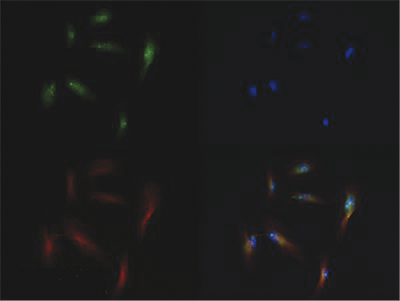
Figure 1. Immunofluorescence
Immunofluorescence using the H3K56me1 antibody. Tissue: HeLa cells. Fixation: 0.5% PFA. Primary antibody used at a 1:100 dilution for 1 h at RT. Secondary antibody: Dylight 488 secondary antibody at 1:10,000 for 45 min at RT. Localization: Histone H3K56me1 is nuclear and chromosomal. Staining: Histone H3K56me1 is expressed in green, nuclei and alpha-tubulin are counterstained with DAPI (blue) and Dylight 550 (red).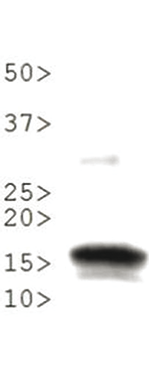
Figure 2. Western Blot
Western Blot using the H3K56me1 antibody. 30 µg C. elegans embryo lysate. Primary antibody used at 1 µg/ml overnight at 4°C. Secondary antibody: IRDye800TM rabbit secondary antibody at 1:10,000 for 45 min at RT. Predicted/Observed size: ~15 kDa. Other band(s): None.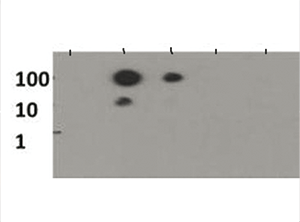
Figure 3. Dot Blot
Dot Blot using the H3K56me1 antibody. Lane 1: H3K561ac. Lane 2: H3K56me1. Lane 3: H3K56me2. Lane 4: H3K56me3. Lane 5: H3K56 unmodified. Load: 1, 10, and 100 picomoles of peptide. Primary antibody used at a 1:40 dilution for 45 min at 4°C. Secondary antibody: DylightTM488 rabbit secondary antibody at 1:10,000 for 45 min at RT. - Publications

How to properly cite our product/service in your work
We strongly recommend using this: H3K56me1 Antibody (Hologic Diagenode Cat# C15410296 Lot# 002). Click here to copy to clipboard.
Using our products or services in your publication? Let us know!