

N6-methyladenosine (m6A) is a modified base which is abundant in mRNA in most eukaryotes but also has been found in tRNA’s, rRNA’s, snRNA’s and in long non-coding RNA’s. Adenosine methylation is catalyzed by m6A methyltransferase, a large protein complex which has a preference for the consensus sequence GGACU. In human, the m6A modification has been identified in more than 7000 genes. It is preferably present around stop codons and in the 3’ UTR but has not been observed in poly A tails. m6A is dynamically regulated both throughout development and in response to cellular stimuli. Levels are significantly higher in adulthood than during embryonic development. Although the presence of m6A in RNA was identified several years ago, it’s physiological significance remains largely unknown. It has been proposed to affect mRNA processing and export from nucleus to cytoplasm. Recently, it was shown that mutations in the m6A demethylase gene FTO, which cause a decrease of m6A levels, are associated with an increased risk for obesity and type 2 diabetes.
N6-methyladenosine (m6A) Antibody - RIP Grade

Monoclonal antibody raised in mouse against N6-methyladenosine (m6A) conjugated to BSA.
| Lot | 001 |
|---|---|
| Concentration | 2 μg/μl |
| Species reactivity | Human, mouse, other (wide range) |
| Type | Monoclonal |
| Purity | Protein A purified monoclonal antibody. |
| Host | Mouse |
| Storage Conditions | Store at -20°C; for long storage, store at -80°C. Avoid multiple freeze-thaw cycles. |
| Storage Buffer | PBS containing 0.05% azide. |
| Precautions | This product is for research use only. Not for use in diagnostic or therapeutic procedures. |
| Applications | Suggested dilution | References |
|---|---|---|
| RIP* | 2 µg per IP | Fig 1, 2 |
| Dot Blotting | 1:500 | Fig 3, 4 |
* Please note that the optimal antibody amount per IP should be determined by the end-user. We recommend testing 1-10 µg per IP.
- Validation Data
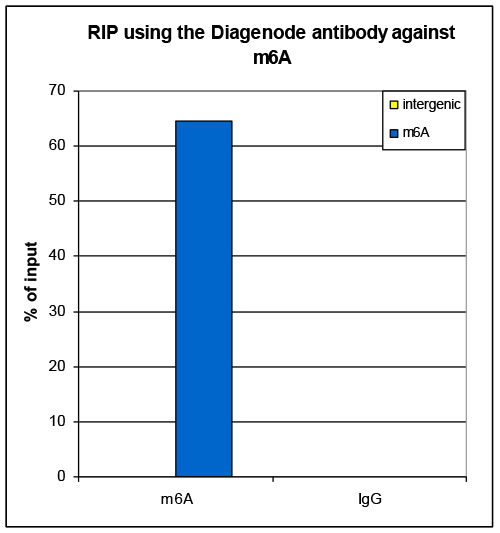
Figure 1. RNA immunoprecipitation using the Diagenode monoclonal antibody directed against m6A
RNA Immunoprecipitation was performed on 40 µg HeLa total RNA spiked with 0.5 µg of an in vitro prepared transcript containing 6mA nucleotides, using 2 µg of the Diagenode monoclonal m6A antibody (cat. nr. C15200082). An equal amount of IgG was used as negative control. The immunoprecipitated RNA was subsequently analyzed by qRT-PCR with primers specific for the transcript and for an intergenic region, used as negative control. Figure 1 shows the recovery, expressed as a % of input (the relative amount of immunoprecipitated DNA compared to input DNA after qPCR analysis).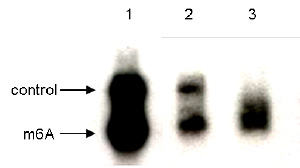
Figure 2. RNA immunoprecipitation using the Diagenode monoclonal antibody directed against m6A
Immunoprecipitation was performed on two radiolabelled synthetic RNA oligo’s, a 250 nt oligo containing m6A nucleotides and a 350 nt unmethylated control, using the Diagenode monoclonal m6A antibody (cat. nr. C15200082). The immunoprecipitated fraction is shown in lane 3; lane 2 shows the non bound fraction, whereas the input is shown in lane 1.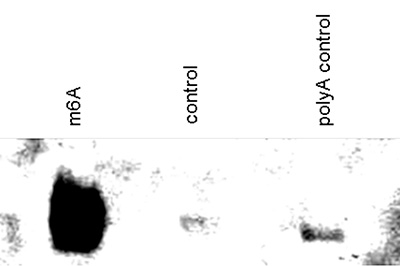
Figure 3. Dot blot analysis using the Diagenode monoclonal antibody directed against m6A
To demonstrate the specificity of the Diagenode monoclonal antibody against m6A (Cat. No. C15200082), a Dot Blot analysis was performed using an m6A containing, a non-methylated control and a non-methylated polyA control synthetic RNA oligonucleotide.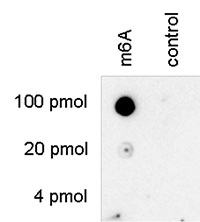
Figure 4. Dot blot analysis using the Diagenode monoclonal antibody directed against m6A
Dot Blot analysis was performed using a synthetic DNA oligonucleotide containing different m6A modified bases and a negative control. 100 to 4 pmol of the respective oligo’s were spotted on the membrane. The antibody was diluted of 1:500 in TBS-T containing 10 % skimmed milk and 1% BSA. Figure 4 shows a high specificity of the antibody for the modified oligonucleotide. - 出版物

How to properly cite our product/service in your work
We strongly recommend using this: N6-methyladenosine (m6A) Antibody - RIP Grade (Hologic Diagenode Cat# C15200082 Lot# 001). Click here to copy to clipboard.
Using our products or services in your publication? Let us know!
Single-cell m6A mapping in vivo using picoMeRIP-seq
Li Y. et al.
Current N-methyladenosine (mA) mapping methods need large amounts of RNA or are limited to cultured cells. Through optimized sample recovery and signal-to-noise ratio, we developed picogram-scale mA RNA immunoprecipitation and sequencing (picoMeRIP-seq) for studying mA in vivo in single cells and scarce cell types u...Evaluation of N<sup>6</sup>-adenine DNA-immunoprecipitation-basedgenomic profiling in eukaryotes
Debo Brian M. et al.
The detection of low-abundance DNA N6-methyladenine (DNA-m6A) remains challenging, limiting our understanding of this novel base in eukaryotes. To address this, we introduce an approach for systematically validating the selectivity and sensitivity of antibody-based DNA-m6A methods, revealing most commercial antibodi...