

CRISPR systems are adaptable immune mechanisms which are present in many bacteria to protect themselves from foreign nucleic acids, such as viruses, transposable elements or plasmids. Recently, the CRISPR/Cas9 (CRISPR-associated protein 9 nuclease, UniProtKB/Swiss-Prot entry Q99ZW2) system from S. pyogenes has been adapted for inducing sequence-specific double stranded breaks and targeted genome editing. This system is unique and flexible due to its dependence on RNA as the moiety that targets the nuclease to a desired DNA sequence and can be used to induce indel mutations, specific sequence replacements or insertions and large deletions or genomic rearrangements at any desired location in the genome. In addition, Cas9 can also be used to mediate upregulation of specific endogenous genes or to alter histone modifications or DNA methylation.
CRISPR/Cas9 C-terminal monoclonal antibody

Monoclonal antibody raised in mouse against the C-terminus of Cas9 nuclease (CRISPR-associated protein 9).
| Lot | 001 |
|---|---|
| Concentration | 2.2 μg/μl |
| Species reactivity | Streptococcus pyogenes |
| Type | Monoclonal |
| Purity | Protein G purified |
| Host | Mouse |
| Storage Conditions | Store at -20°C; for long storage, store at -80°C. Avoid multiple freeze-thaw cycles |
| Precautions | This product is for research use only. Not for use in diagnostic or therapeutic procedures. |
| Applications | Suggested dilution | References |
|---|---|---|
| ChIP * | 5 μg/ChIP | Fig 1 |
| Western Blotting | 1:6,000 | Fig 2 |
| Immunofluorescence | 1:100 | Fig 3 |
* Please note that the optimal antibody amount per IP should be determined by the end-user. We recommend testing 1-10 μg per IP.
- Validation data
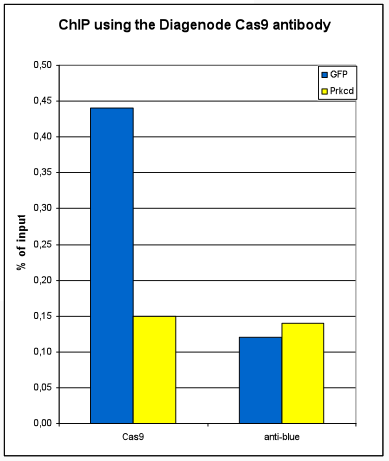
Figure 1. ChIP using the Diagenode monoclonal antibody directed against Cas9
ChIP was performed on NIH3T3 cells stably expressing GFP-H2B, nuclease dead Cas9, and a GFP-targeting gRNA. 50 μg chromatin was incubated overnight at 4°C with 5 μg of either the Diagenode antibody against Cas9 (cat. No. C15200231) or the anti-blue antibody (C15200213), used as a negative IP control. qPCR was performed with primers speci c for the GFP gene, and for a non-targeted region (protein kinase C delta, Prkcd), used as negative control. Figure 1 shows the recovery, expressed as a % of input (the relative amount of immunoprecipitated DNA compared to input DNA after qPCR analysis).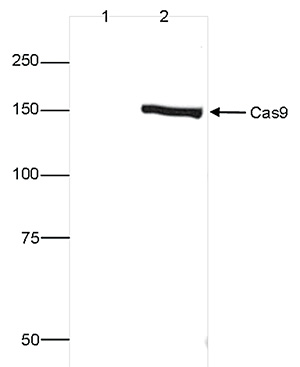
Figure 2. Western blot analysis using the Diagenode monoclonal antibody directed against CRISPR/Cas9
Western blot was performed on protein extracts from HeLa cells transfected with Cas9 (lane 2) or on untransfected control cells (lane 1) using the Diagenode antibody against CRISPR/Cas9 (Cat. No. C15200231). The antibody was diluted 1:6,000 in TBS-T containing 3% NFDM. The marker is shown on the left, position of the Cas9 protein is indicated on the right.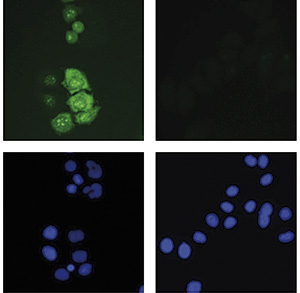
Figure 3. Immunofluorescence using the Diagenode monoclonal antibody directed against CRISPR/Cas9
HeLa cells expressing Cas9 under the control of the tight TRE promoter and untransfected control cells were fixed in methanol at -20°C, permeabilized with acetone at -20°C and blocked with PBS containing 2% BSA. The cells were stained with the Cas9 C-terminal antibody (Cat. No. C15200231) diluted 1:100, followed by incubation with a donkey anti-mouse secondary antibody coupled to AF488 (upper panel). Nuclei were counter-stained with Hoechst 33342 (lower panel). - 出版物

How to properly cite our product/service in your work
We strongly recommend using this: CRISPR/Cas9 C-terminal monoclonal antibody (Hologic Diagenode Cat# C15200231-100 Lot# 001). Click here to copy to clipboard.
Using our products or services in your publication? Let us know!
A self-inactivating system for AAV-mediated in vivo base editing
Zuo Y. et al.
DNA base editors have been harnessed as an exciting therapeutic platform for human diseases and are rapidly progressing into human clinical trials. However, persistent expression of base editors delivered via adeno-associated virus (AAV) poses concerns with specificity and immunogenicity. Here we develop selfinactiv...